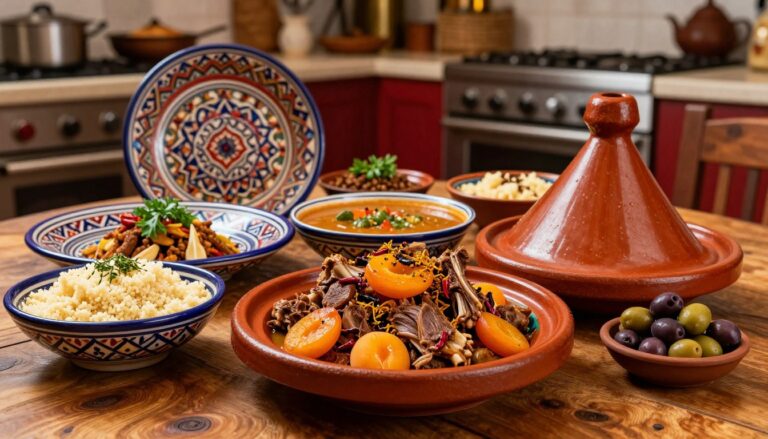

Best Moroccan Dishes to Try in 2026
Did you know over 70% of home cooks in the UK want bolder, global flavors? They’re looking to spice up their meals. This shows a big interest in using vibrant spices to make simple foods into amazing dishes.
Thank you for reading this post, don't forget to subscribe!This guide is your key to exploring North African cooking at home. We’ll teach you the must-know techniques and ingredients for traditional Moroccan dishes. You’ll learn to make delicious slow-cooked tagines and fragrant couscous.
Looking ahead, these recipes are the best Moroccan dishes to try in 2026 for those who love authentic flavors. By following these easy steps, you’ll be able to make dishes that have wowed people for years.
Key Takeaways
- Discover how to source authentic North African spices locally.
- Master the fundamental techniques of slow-cooking in a tagine.
- Learn to balance sweet and savory profiles in your home kitchen.
- Explore essential pantry staples that define regional flavor profiles.
- Gain confidence in preparing meals that impress family and friends.
Setting the Stage for Your Moroccan Culinary Journey
To master flavorful Moroccan cuisine, start with the right ingredients. A memorable meal is more than a recipe. It’s about understanding the key elements of this vibrant tradition.
Stock your kitchen with the essentials for every dish to have depth and complexity. This is the first step to bring North Africa’s spirit into your home.
Essential Pantry Staples for Authentic Moroccan Cooking
Focus on quality spices and grains to build a strong base. These are the foundation for your sauces, tagines, and couscous.
- Ras el Hanout: A complex blend of the best spices in the shop.
- Preserved Lemons: Essential for adding a salty, tangy punch to slow-cooked meals.
- Semolina: The primary grain used for traditional couscous.
- Extra Virgin Olive Oil: The heart of most Moroccan dressings and cooking bases.
The table below shows key spices for your cooking adventures.
| Spice Name | Primary Flavor Profile | Best Used In |
|---|---|---|
| Cumin | Earthy and warm | Vegetable sides and tagines |
| Saffron | Floral and luxurious | Rice dishes and soups |
| Ginger | Sharp and spicy | Meat-based stews |
| Turmeric | Mild and golden | Broths and marinades |
Sourcing Ingredients in the United Kingdom
Finding quality ingredients in the UK is easier than ever. Local markets and specialty grocers now carry a wide range of North African products.
Look for flavorful Moroccan cuisine staples at independent delicatessens or online retailers. Choose shops that sell fresh, whole spices for a stronger aroma and taste.
Building your ingredient collection over time lets you cook with confidence. With these essentials, you’re ready to impress with authentic Moroccan food.
Mastering the Art of the Tagine
Learn how the iconic conical pot turns simple ingredients into a feast. It’s not just cookware; it’s a cultural symbol of North Africa’s slow-cooking traditions. Using it, you unlock secrets to many delicious moroccan recipes that need patience and gentle heat.
Selecting the Right Tagine Pot for Your Kitchen
Choosing a tagine means picking between traditional clay and modern enameled ones. Clay pots give food an earthy taste but need seasoning first. Enameled pots are easier to care for and work well on modern stovetops.
The conical lid is key. It makes sure your food stays moist by letting steam drip back down. Use the table below to pick the best one for you.
| Feature | Unglazed Clay | Enameled Cast Iron |
|---|---|---|
| Heat Retention | Excellent | Superior |
| Maintenance | Hand wash only | Dishwasher safe |
| Flavor Profile | Earthy and rustic | Clean and consistent |
| Best For | Traditionalists | Busy home cooks |
Step-by-Step Guide to a Classic Lamb and Prune Tagine
A lamb and prune tagine is a great start to delicious moroccan recipes. It mixes savory meat with sweet fruit for a memorable taste. Follow these steps for a perfect dish every time.
Preparing the Meat and Aromatics
Marinate your lamb shoulder in ginger, turmeric, saffron, and cinnamon. Let it sit for at least an hour. Sauté onions and garlic in the tagine’s base until soft.
The Slow-Cooking Process
Brown the lamb on all sides. Add water or stock to cover half the meat. Cover with the lid and cook on low for two hours. Add prunes in the last thirty minutes to keep them tender.
The Best Moroccan Dishes to Try in 2026
Exploring the best Moroccan dishes to try in 2026 is a tasty way to grow your cooking skills. These meals mix old traditions with new tastes. They add excitement and warmth to your kitchen, no matter your cooking level.
Exploring Modern Twists on Traditional Flavors
The world of Moroccan cuisine 2026 loves to try new things with real ingredients. You might love the bold flavors of street foods like Babbouche, a salty snail soup. It’s a mix of rustic and fancy, enjoyed with a toothpick.
Today’s cooks mix old flavors with easy techniques. Using top spices and fresh veggies, you can bring Marrakech’s market vibe home. These popular Moroccan meals show you don’t need fancy tools for great taste.
Why These Dishes Define the 2026 Culinary Landscape
The top Moroccan recipes 2026 are known for their mix of textures and spices. They’re more than food; they’re about welcoming guests and sharing meals. Here’s a table of key dishes to master this year.
| Dish Name | Primary Flavor Profile | Difficulty Level | Best Served With |
|---|---|---|---|
| Babbouche (Snail Soup) | Salty, Herbal, Earthy | Advanced | Crusty Bread |
| Lamb Tagine | Sweet, Savory, Spiced | Intermediate | Couscous |
| Zaalouk | Smoky, Garlic, Tomato | Easy | Khobz Bread |
| Harira Soup | Hearty, Tangy, Rich | Intermediate | Dates |
Adding these must-try Moroccan dishes to your meals will boost your cooking. They celebrate North African traditions and add depth to your cooking. Begin your journey now and enjoy the rich flavors of this timeless cuisine.
Preparing Traditional Moroccan Couscous
Couscous is more than a side dish; it’s a labor of love. It needs patience and special techniques for the perfect texture. Mastering this makes your cooking stand out, adding warmth to any meal.
The Technique of Steaming Semolina
To get fluffy semolina, steam it, not boil. Rub the grains with oil and water to keep them light. A couscoussier steamer infuses the grains with flavors from below.
Creating the Perfect Seven-Vegetable Broth
A good broth makes semolina moist and tasty. Simmering various vegetables creates a flavorful base. This slow cooking blends all ingredients for a perfect dish.
Selecting Seasonal Vegetables
For the best taste, pick vegetables in season. Mix them based on what’s available in the UK. Here are some key ones:
- Carrots for sweetness and color.
- Courgettes for soft texture.
- Pumpkin or squash for earthy flavor.
- Turnips for a peppery kick.
Balancing Spices for Depth of Flavor
Spices are the broth’s heart, so balance is essential. Begin with ginger, turmeric, and saffron for a fragrant base. Taste as you go to keep spices in check. This way, you’ll impress your guests with a classic traditional Moroccan dish.
Crafting Authentic Harira Soup at Home
Want to master authentic Moroccan food? Learning to make Harira is key. This hearty soup is a symbol of hospitality, often served during Ramadan to break the fast.
There is something deeply comforting about the spices blending in a pot. Making this recipe brings you closer to a rich culinary heritage. It values warmth and nourishment.
The Importance of Lentils and Chickpeas
The heart of Harira is its texture and protein. Use high-quality dried chickpeas and lentils for the best taste.
Soaking chickpeas overnight is a vital preparation step. It makes them tender without losing shape. These legumes add body to the soup, making it a filling meal.
Achieving the Perfect Tomato-Based Consistency
To make authentic Moroccan food, balance the tomato base is key. Aim for a soup that’s thick, velvety, and sweet from vine-ripened tomatoes.
Home cooks mix fresh tomato purée with a bit of flour-based thickener for the right consistency. Take your time simmering the broth. This lets flavors deepen and texture smooth out.
The soup should coat the back of a spoon. When it does, you’ve successfully made authentic Moroccan food at home.
Baking Moroccan Bread and Pastries
Bread is the heart of the Moroccan table. It’s used as a side and a utensil for meals. Fresh bread is used to scoop up tagines and salads instead of cutlery. Learning these delicious moroccan recipes brings an authentic, warm feel to your kitchen.

How to Make Khobz for Dipping
Khobz is the quintessential round, flat bread found in Moroccan restaurants and homes. It has a crusty outside and soft inside, perfect for sauces. You need flour, yeast, water, and salt to make this essential bread.
“Bread is the lifeblood of the table; it is the bridge between the guest and the meal.”
Mastering the Layers of M’smen
M’smen is a beloved square-shaped flatbread known for its buttery layers. It requires stretching and folding to get its texture. Adding this to your delicious moroccan recipes offers a delightful treat with honey or savory fillings.
Folding Techniques for Flaky Results
To get flaky layers, stretch the dough until it’s thin on an oiled surface. Fold it into a square, creating thin sheets of dough. This traps air for a crispy, golden finish on a hot griddle.
| Bread Type | Primary Use | Texture |
|---|---|---|
| Khobz | Scooping Tagines | Soft and Crusty |
| M’smen | Breakfast or Tea | Flaky and Buttery |
| Batbout | Sandwich Pockets | Chewy and Light |
Practicing these traditional methods boosts your baking skills. Your guests will love the warm, homemade bread with your delicious moroccan recipes.
Infusing Your Kitchen with Moroccan Spices
The secret to flavorful Moroccan cuisine is in spice blending. By picking and mixing aromatic ingredients, you can turn simple foods into amazing meals. It’s not just about adding heat. It’s about creating layers of flavor that make North African cooking special.
Understanding Ras el Hanout
Ras el Hanout is a key spice blend in Moroccan cooking. It means “head of the shop,” showing it’s the best spices a merchant has. This mix has many ingredients, from floral notes to earthy spices.
Use this blend to add depth to tagines, roasted veggies, or grilled meats. A little goes a long way. Start with a teaspoon in your sauces to enhance your flavorful Moroccan cuisine without overpowering it.
“Spices are the soul of the kitchen, turning the mundane into the magical with just a pinch of tradition.”
Balancing Saffron, Cumin, and Ginger
Getting the right mix of saffron, cumin, and ginger is key. Saffron adds a floral scent and a golden color. Cumin gives a warm, earthy taste. Ginger adds a sharpness that cuts through rich flavors.
Here’s a spice ratio guide to help you balance flavors. Adjust these amounts based on your taste and the dish you’re making.
| Spice | Primary Flavor Profile | Best Use Case | Recommended Intensity |
|---|---|---|---|
| Saffron | Floral and Luxurious | Couscous and Rice | Light Pinch |
| Cumin | Earthy and Robust | Lamb and Legumes | Moderate |
| Ginger | Sharp and Zesty | Chicken and Fish | Balanced |
Remember, these spices should work together, not fight each other. By balancing them, you make sure every bite is a true taste of flavorful Moroccan cuisine. As you try different ratios, you’ll find your own kitchen style.
Refreshing Moroccan Salads and Sides
Mastering must-try Moroccan dishes starts with these essential vegetable sides. They offer a refreshing contrast to the rich main courses. Serving them alongside your meal makes for a balanced, authentic dining experience at home.
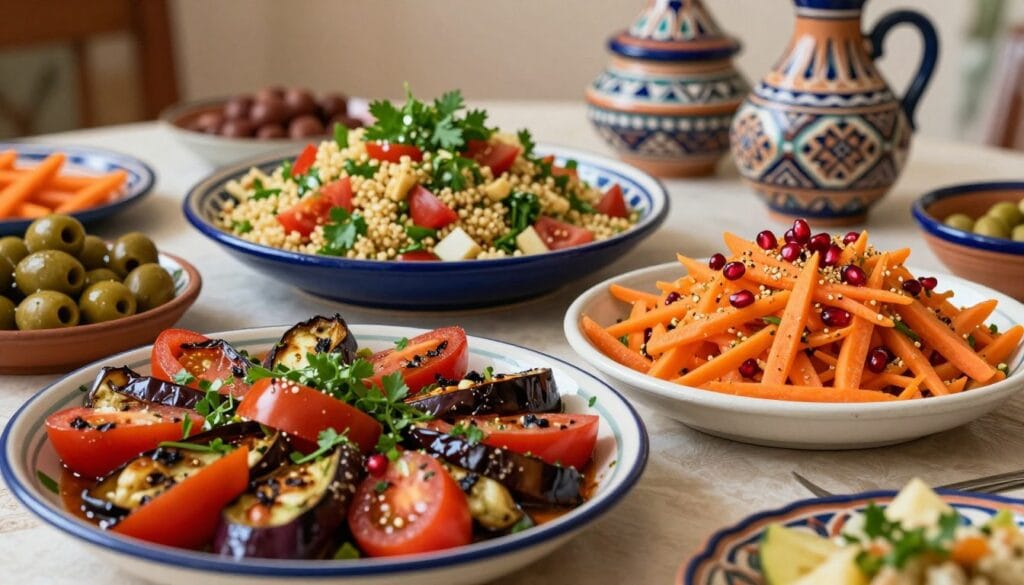
Preparing Zaalouk with Roasted Eggplant
Zaalouk is a favorite, made with roasted eggplant, garlic, paprika, and cumin. It has a velvety texture that goes well with warm bread. The smoky eggplant adds depth, making it a must-try for home cooks.
To make it, roast eggplants until charred and tender. Then, mash the pulp with spices and sauté until flavors blend. It’s a simple yet incredibly flavorful addition to your meal.
Creating a Vibrant Carrot and Orange Salad
The carrot and orange salad is a bright, citrusy choice. It balances fresh carrots’ sweetness with orange juice’s zesty acidity and a hint of cinnamon. It’s a delightful palate cleanser that showcases fresh produce’s versatility.
Just grate carrots and mix with orange juice, orange blossom water, and cinnamon. This salad is stunning and light, perfect for a summer gathering.
| Side Dish | Primary Flavor | Texture | Best Served |
|---|---|---|---|
| Zaalouk | Smoky & Savory | Creamy | Warm or Room Temp |
| Carrot Salad | Sweet & Citrusy | Crunchy | Chilled |
| Taktouka | Spicy & Tangy | Soft | Warm |
The Ritual of Moroccan Mint Tea
Moroccan mint tea is more than a drink; it’s a sign of welcome and warmth. It’s a tradition that ends meals and greets guests. By learning this ritual, you bring a piece of North Africa into your home.
Selecting the Right Green Tea and Fresh Mint
To make authentic Moroccan mint tea, start with the right ingredients. Use high-quality green tea, like gunpowder tea. It has a strong, earthy taste that balances the sweetness and freshness of the herbs.
For the best flavor, choose fresh spearmint and sugar. These are key to a perfect tea.
- Gunpowder green tea: The standard choice for a bold, clean flavor.
- Fresh spearmint: Look for vibrant, fragrant leaves that are free from wilting.
- Sugar: Traditional recipes often use generous amounts of sugar to balance the intensity of the tea.
The Art of the Pour for Maximum Froth
Steeping the tea is just the beginning. The final step is pouring the tea from high above the glass. This method aerates the tea and cools it slightly.
As you pour, a layer of bubbles forms on the tea’s surface. This is called the crown. It shows you’re a skilled host. Practice pouring with water first to get better at it.
Hosting a Moroccan-Inspired Dinner Party
Turn your dining room into a cozy oasis with a Moroccan-themed dinner. Sharing meals is key in North African culture. It’s a great way to bond with friends and family. Warm hospitality makes your gathering feel exotic yet welcoming.
Curating a Menu for Your Guests
A good dinner party needs a menu with bold spices and fresh textures. Choose dishes that mix slow-cooked stews with crisp salads. Serving popular moroccan meals lets your guests taste the real Morocco.
Here are key items for your feast:
- A centerpiece tagine with tender meat or veggies.
- Fresh, zesty salads like zaalouk or carrot-orange medleys.
- Warm, homemade khobz bread for sauces.
- A refreshing pot of mint tea to end the night.
Remember to ask about dietary needs early. Many popular moroccan meals are vegetarian or gluten-free. Use top-quality spices like saffron and cumin to make your dishes unforgettable.
Setting the Table with Moroccan Aesthetics
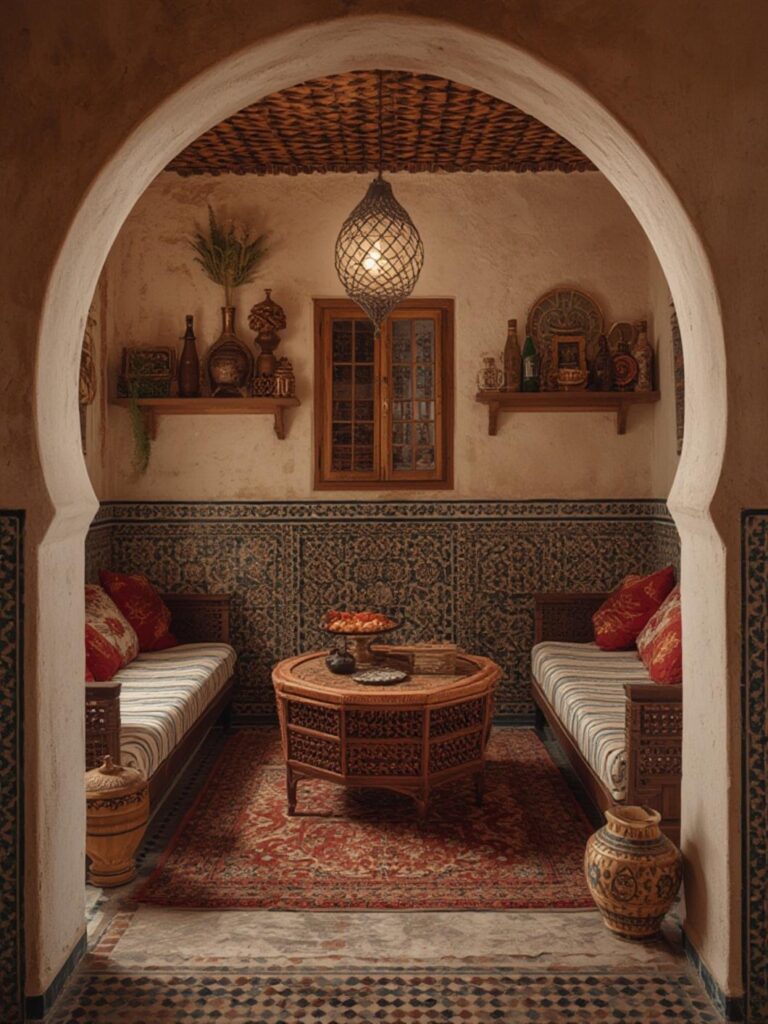
The look of your dinner party is as important as the food. Use vibrant textiles and warm lighting to feel like a riad. Colorful runners and brass accents will transport your guests.
Low seating or floor cushions create a relaxed atmosphere. Candlelight is key for that soft, inviting glow. These details turn your meal into an unforgettable sensory journey.
Conclusion
Your journey into Moroccan cuisine 2026 opens a world of rich traditions and bold spices. Now, you can turn simple ingredients into aromatic dishes that warm your home.
Trying out these top Moroccan recipes 2026 lets you share real experiences with loved ones. Each meal you make shows the lasting charm of these classic methods.
Keep exploring UK markets for the freshest ingredients and spices. Your kitchen is where you can perfect your skills and find new flavors.
Share your favorite dishes on social media to inspire others. Your love for cooking keeps these traditions alive and growing for years.