Morocco Food 2026 Guide to Authentic Flavors and Recipes.
Ever thought of bringing North African hospitality into your kitchen? Social media often leaves us craving more. This guide helps bridge that gap, leading to tangible culinary success.
Thank you for reading this post, don't forget to subscribe!Ready to dive into the authentic cuisine of morocco? This guide makes it easy. It simplifies spice blends and cooking techniques. Your table will show off the rich heritage of Morocco.
Looking ahead to Morocco Food 2026, you’ll learn to mix savory and sweet perfectly. Get ready to turn cooking into a cultural journey. It will impress your loved ones.
Key Takeaways:
- Learn the essential spice combinations that define regional dishes.
- Discover practical techniques to replicate traditional slow-cooking methods.
- Gain the confidence to host your own North African-inspired dinner parties.
Mastering the Essential Moroccan Spice Palette
The secret to unlocking the authentic cuisine of Morocco is in your spice cabinet. By mixing earthy, sweet, and pungent spices, you can create the complex flavors of this tradition. Every pinch of spice tells a story of ancient trade and family heritage.
Understanding Ras el Hanout and Its Variations
Ras el Hanout, or “head of the shop,” is Morocco’s spice crown. It’s a mix of spices like cardamom and rose petals. Each merchant’s mix is unique, so flavors vary by region and household.
Choose a blend with a vibrant color and strong scent. A good one should be balanced, not overwhelming. It adds a warm, floral taste to your dishes. Try different blends to make your dishes your own while honoring Moroccan cuisine.
The Role of Saffron and Preserved Lemons
Saffron threads add a golden color and a subtle aroma to stews. Just a pinch can change a dish. Handle these delicate threads with care to get the most flavor.
Preserved lemons add a sharp, citrusy taste to rich meats. They’re made by fermenting lemons in salt and their own juices. Saffron and preserved lemons together are key to Moroccan cooking.
Sourcing Authentic Ingredients in the United States
Finding top-notch Moroccan ingredients in the U.S. is easier now. Specialty shops and online stores offer premium saffron and spice blends. Look for fresh, small-batch products for the best taste.
Local international markets are great for finding preserved lemons and semolina. If you can’t find something, ask the shop owner for advice. A good supplier makes your pantry ready for Moroccan cooking.
Setting Up Your Moroccan Kitchen for Success
Creating a functional space that honors traditional cooking methods is key. It’s the first step to mastering complex, aromatic flavors. If you want to replicate the magic seen on a moroccan food blog, your kitchen setup is essential.
Selecting the Right Tagine for Your Stove
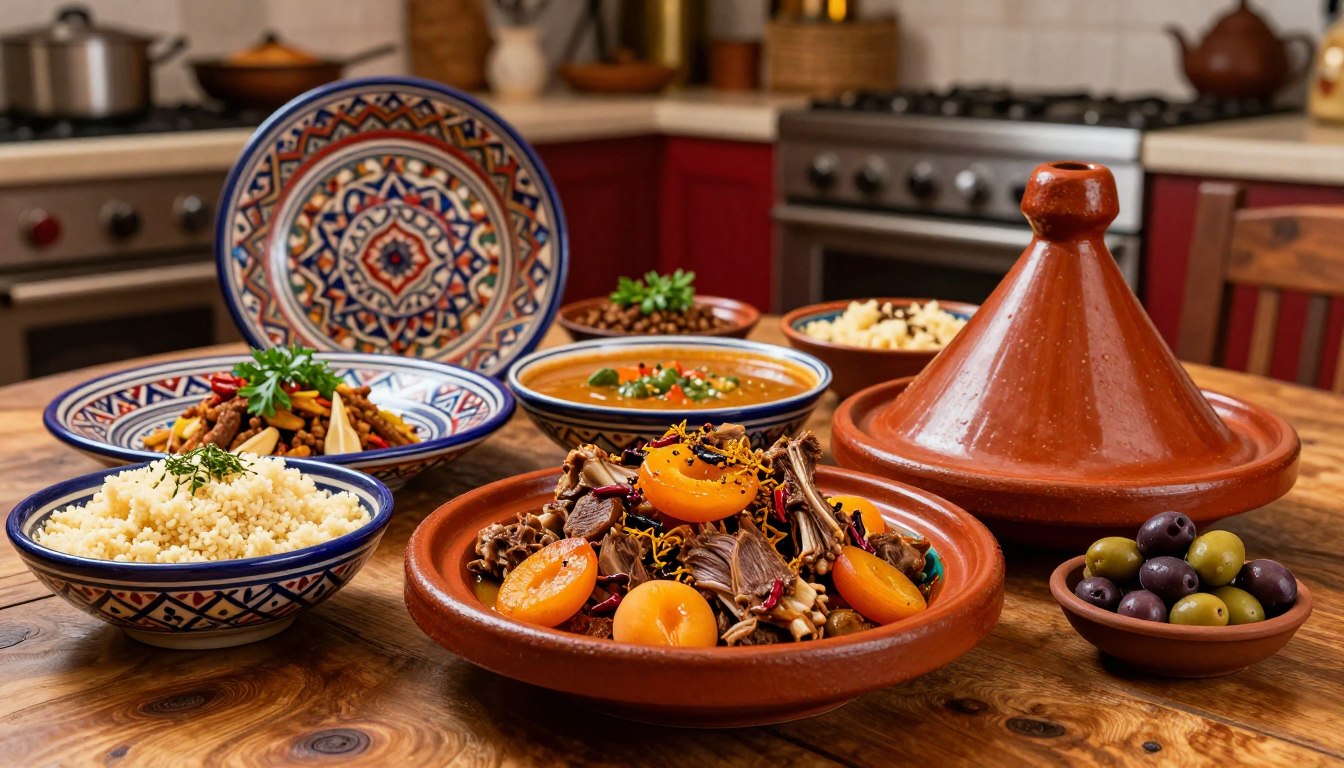
The iconic conical tagine is vital for moisture retention. You must choose one that fits your specific heat source. If you use a gas stove, a traditional unglazed clay tagine works beautifully. But, it needs a heat diffuser to prevent cracking.
For electric or induction cooktops, look for modern tagines with a heavy-duty cast iron base. These versions provide the necessary heat distribution. Always check the manufacturer’s guidelines to ensure your vessel is safe for your specific range.
Essential Tools for Traditional Preparation
Beyond the tagine, a few specialized tools will elevate your cooking process. A couscoussier is indispensable for steaming semolina to fluffy perfection. A sturdy mortar and pestle helps you grind fresh spices for authentic depth.
- Couscoussier: A two-part steamer for grains.
- Mortar and Pestle: Essential for crushing saffron and whole spices.
- Clay Pots: Ideal for slow-cooking stews and preserving heat.
Organizing Your Pantry for Moroccan Cooking
An organized pantry ensures that your ingredients are always within reach. Group your spices, legumes, and grains in clear, airtight containers. This maintains freshness and visibility.
Keep your preserved lemons and olives in a dedicated section. Streamlining your workspace reduces stress. It allows your creativity to flourish during cooking.
| Tool Name | Primary Use | Material |
|---|---|---|
| Tagine | Slow-cooking stews | Clay or Cast Iron |
| Couscoussier | Steaming semolina | Stainless Steel |
| Mortar & Pestle | Grinding spices | Stone or Wood |
| Heat Diffuser | Protecting clay | Metal |
Step-by-Step Guide to Preparing a Classic Lamb Tagine
Preparing a classic lamb tagine is a journey that brings North Africa’s heart to your kitchen. It’s a rewarding traditional Moroccan dish that gets better with time. By following a structured approach, every ingredient will shine in the final dish.
Preparing the Meat and Aromatics
The key to a great tagine is the quality of your lamb. Choose shoulder or shank for the best results. These cuts become buttery and tender during the long braise.
Start by searing the meat in a heavy-bottomed pot or tagine base. This gives it a rich, golden-brown crust. Once browned, remove the meat and add your aromatics to the fat.
Use finely diced onions, minced garlic, and grated ginger as your aromatics. Sauté them slowly until they’re soft and translucent. This prevents burning and adds sweetness to your sauce.
Layering Flavors for Slow Cooking
Layering is key to a balanced flavor in your tagine. After the aromatics are ready, return the lamb to the pot. Coat it with your spice blend to bloom the spices and release their oils.
Add broth or water just enough to cover the meat. Include preserved lemons or dried fruits to meld with the juices. This layering helps the meat absorb the spices deeply.
Managing Heat and Moisture Levels
Keeping a low, consistent temperature is essential. High heat can make the sauce reduce too fast, leaving the meat tough. Seal the lid to trap the steam for gentle cooking.
Check the moisture levels often to keep the sauce thick and glossy. If it’s too dry, add a bit of warm water. These steps will help you make a delicious best Moroccan recipe at home.
| Cooking Stage | Primary Goal | Key Technique |
|---|---|---|
| Searing | Flavor Development | High heat for crust |
| Aromatic Sauté | Base Building | Low heat for sweetness |
| Slow Braising | Tenderizing | Consistent low moisture |
| Final Reduction | Sauce Consistency | Uncovered finishing |
Mastering these traditional Moroccan dishes takes practice. But the effort is worth it. With patience and detail, you’ll create a meal that embodies Moroccan hospitality.
Crafting the Perfect Moroccan Couscous
Steamed couscous is a symbol of Moroccan hospitality. It’s a dish that shows off a cook’s skill, needing patience and care. Learning to make it is a key part of cooking, perfect for family gatherings.
Selecting the Right Semolina Grain
The quality of your semolina is key to a great couscous. Look for durum wheat semolina that’s a bit coarse. Authenticity matters when picking ingredients, as it affects the dish’s texture.
Stay away from pre-steamed or “instant” couscous. High-quality grains soak up moisture better, making your couscous light and fluffy.
The Traditional Steaming Process
Boiling couscous like pasta can make it gummy. The traditional steaming process is better. It makes the grains swell gently, staying separate and airy.
You need a couscoussier, a two-part steamer pot, for the best results. Steaming the grains over simmering broth infuses them with aromatic steam, a secret in best moroccan recipes.
Creating the Vegetable and Broth Base
A flavorful base is key for a rich couscous. Start by sautéing onions, garlic, and spices in the steamer pot. Then, add water or stock, and the steam carries these flavors into the grains.
Add seasonal veggies like carrots, zucchini, and chickpeas for texture and color. This way, every bite of your couscous is full of authentic flavor and nutrients.
| Grain Type | Preparation Method | Best Use Case |
|---|---|---|
| Fine Semolina | Double Steaming | Traditional Festive Meals |
| Medium Semolina | Single Steaming | Quick Weeknight Dinners |
| Pearl Couscous | Boiling/Simmering | Modern Fusion Salads |
By following these steps, you’re on your way to mastering a best moroccan recipe in your kitchen. Enjoy the process of making a meal that brings people together.
Exploring Popular Food in Morocco Through Street Snacks
If you want to taste the most popular food in Morocco, look no further than these iconic street snacks. Street food is a big part of Morocco’s culinary soul. It offers a quick and delicious glimpse into local life. You don’t need to worry about login requirements to enjoy them; we have provided the essential techniques right here for your kitchen.
Making Crispy Briouats at Home
Briouats are delightful, triangular pastries that offer a satisfying crunch with every bite. You can fill these versatile snacks with savory mixtures like spiced ground meat or sweet almond paste. The secret to success lies in the precise folding technique, which ensures the pastry stays sealed during frying.
Start by cutting your warqa or phyllo dough into long strips. Place a small spoonful of your chosen filling at one end and fold the dough over itself in a triangular pattern. Once folded, brush the edges with a little egg wash or flour paste to keep them secure until they turn golden and crispy.
Mastering Msemen Flatbreads
Msemen is a beloved staple that showcases the beauty of simple ingredients. This square-shaped flatbread is famous for its intricate, flaky layers and rich, buttery flavor. Mastering this dough requires patience and a gentle touch as you stretch it thin on your work surface.
To achieve the perfect texture, fold the dough into a square multiple times, adding a light layer of butter and semolina between each fold. This process creates the signature pockets that make Msemen so addictive. Serve these warm with a drizzle of honey or a savory spread for an authentic experience.
Preparing Fresh Moroccan Mint Tea
No snack session is complete without a glass of traditional Moroccan mint tea. This beverage is more than just a drink; it is a symbol of hospitality and friendship. Brewing it correctly involves a specific ritual that balances the intensity of green tea with the sweetness of sugar and the freshness of spearmint.
Begin by rinsing your loose-leaf green tea with boiling water to remove any bitterness. Add a generous handful of fresh mint leaves and sugar to your teapot before pouring in the hot water. For the best results, pour the tea from a height into small glasses to create a delicate foam on top, which indicates a perfectly prepared cup.
Adapting Traditional Moroccan Dishes for Modern Diets
You don’t have to give up the rich flavors of traditional Moroccan dishes to eat healthier. A few tweaks can make these recipes fit your dietary needs. You can keep the essence of the cuisine while living a modern, healthy lifestyle.
Vegetarian and Vegan Tagine Variations
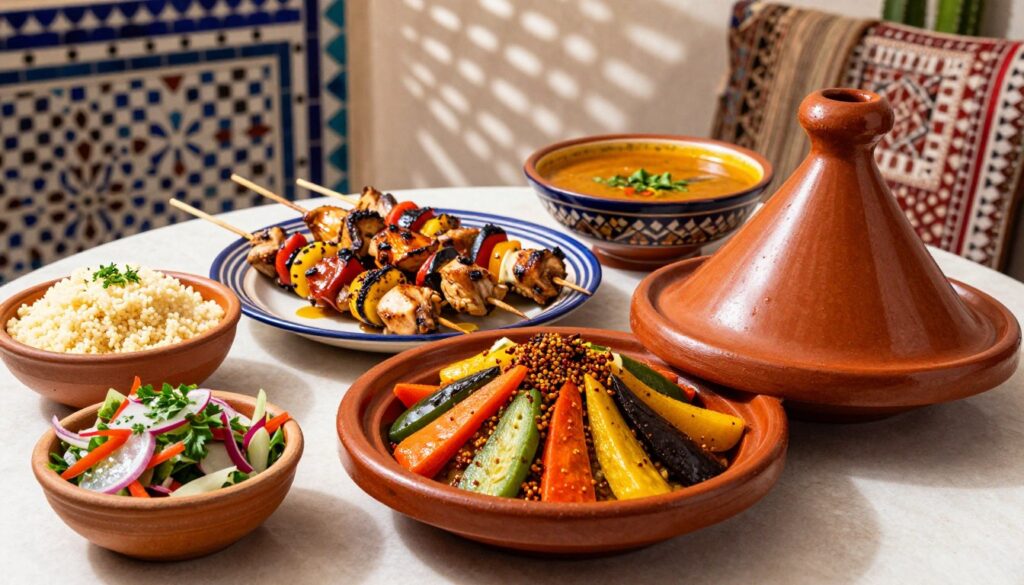
Turn a meaty tagine into a plant-based dish with ease. Use protein-rich chickpeas, lentils, or sweet potato instead of meat. These ingredients soak up spices just like meat, keeping the flavor rich.
Add zucchini, carrots, and bell peppers for texture. Simmering them in a clay tagine makes a sauce that’s both indulgent and healthy.
Gluten-Free Alternatives for Moroccan Recipes
Don’t worry about missing couscous; there are great gluten-free options. Quinoa or cauliflower rice are perfect substitutes for semolina grains. They soak up broths well, making your meals enjoyable.
Season these grains with saffron or turmeric for a look that matches traditional Moroccan dishes. This small touch keeps your meal authentic in taste and appearance.
Balancing Health Trends with Authentic Flavors
The key is using fresh produce and real spices. Focus on whole foods to align with health trends while respecting the cuisine’s heritage. Quality spices like cumin, ginger, and cinnamon are vital, no matter your diet.
| Traditional Ingredient | Healthy Alternative | Benefit |
|---|---|---|
| Lamb or Beef | Chickpeas or Lentils | High Fiber & Plant Protein |
| Semolina Couscous | Quinoa or Cauliflower Rice | Gluten-Free & Lower Carb |
| Clarified Butter (Smen) | Extra Virgin Olive Oil | Heart-Healthy Fats |
| Refined Sugar | Dried Apricots or Dates | Natural Sweetness & Nutrients |
Adapting traditional Moroccan dishes is about being creative and respectful of ingredients. You can create a menu that’s both healthy and satisfying for everyone.
Top Morocco Food 2026 Trends
The world of food is changing, and Morocco Food 2026 is leading this change. You’ll see a mix of old traditions and new ideas. This mix keeps traditional tastes alive in American kitchens.
Fusion Concepts in Modern Moroccan Cuisine
Chefs are mixing old North African ways with new ingredients. Imagine classic tagines with new proteins or local veggies. This way, you get to enjoy Morocco’s heart while trying new things.
Sustainable Sourcing of Moroccan Spices
People want better quality, so there’s a focus on sustainable sourcing of spices. It’s about choosing ingredients that are good for the planet and fair to farmers. This way, your cooking is not only delicious but also kind to the earth.
The Rise of Regional Moroccan Culinary Tours
More people want to dive deep into the food they love through tours. These tours take you to the real places where famous dishes come from. By following these top moroccan food trends, you can bring a taste of Morocco into your cooking.
Hosting an Authentic Moroccan Dinner Party
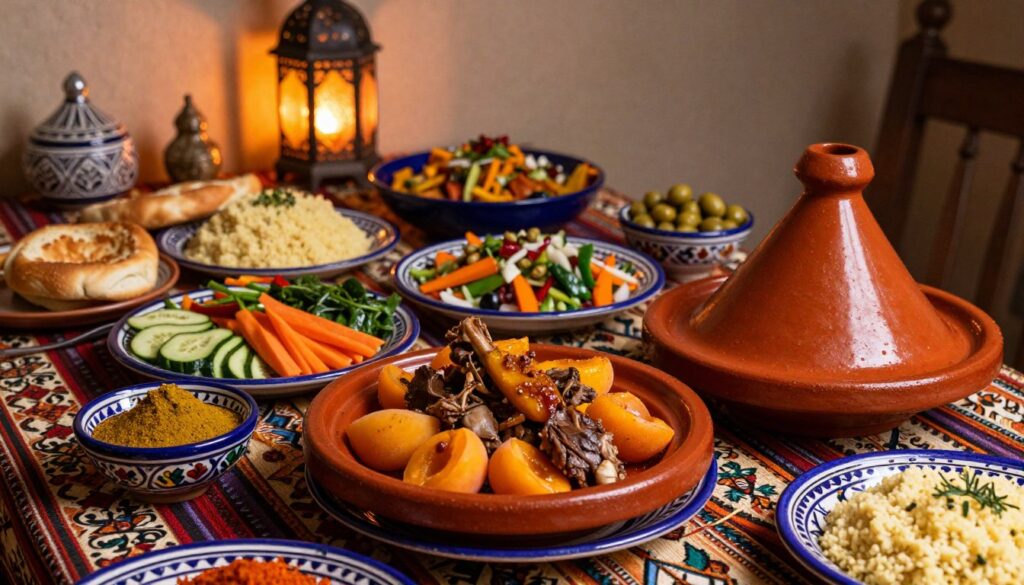
Hosting a dinner party is a great way to share moroccan culinary delights with loved ones. It’s a chance to bring North African hospitality to your home. Your guests will love the effort you put into creating a memorable evening.
Curating a Traditional Menu Flow
A good meal has a rhythm of flavors and textures. Start with small plates to get everyone’s taste buds ready. Then, move to the main dish. Here’s a classic menu structure:
- Salads and Dips: Serve Zaalouk or Taktouka with warm, crusty bread.
- The Main Course: Feature a slow-cooked lamb or vegetable tagine as the centerpiece.
- Sweet Finish: Offer fresh mint tea paired with almond-based pastries or seasonal fruit.
Setting the Table with Moroccan Aesthetics
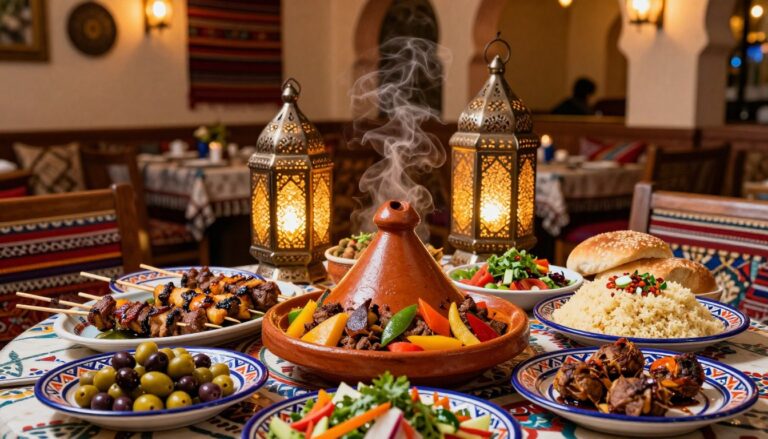
The look of your table is as important as the food. Use vibrant textiles and colorful ceramics to bring Morocco to life. Add ornate lanterns for a warm, inviting glow.
Mix patterns and textures for an authentic look. Brass trays or hand-painted bowls will make your moroccan culinary delights stand out. These details will transport your guests to Marrakech’s bustling markets.
Managing Timing for Multiple Courses
Being organized is key to enjoying the evening. You don’t want to spend all night cooking. Here’s a guide to keep things smooth:
| Course | Preparation Status | Serving Tip |
|---|---|---|
| Appetizers | Ready before arrival | Keep at room temperature |
| Main Tagine | Simmering on low heat | Serve directly from the pot |
| Dessert/Tea | Pre-assembled | Pour tea from a height |
Prep your ingredients ahead of time for perfectly served moroccan culinary delights. The goal is to create a joyful, connected atmosphere. When you’re relaxed, your guests will feel the same.
Troubleshooting Common Moroccan Cooking Challenges
Even the most skilled home cooks sometimes hit roadblocks when making moroccan culinary delights. These recipes are worth the effort, but they need patience and some special techniques. If your dish doesn’t look right, don’t worry. Most problems can be fixed with a few tweaks.
Fixing Over-Reduced Tagine Sauces
If your sauce is too thick or burnt, you can fix it. Just add a bit of warm water or broth. Gently stir it in to make the sauce thinner without losing flavor.
- Add liquid in small increments of two tablespoons.
- Lower the heat immediately to prevent further evaporation.
- Whisk in a teaspoon of butter at the end for a glossy finish.
Ensuring Tender Meat Every Time
Getting meat to be tender is key to great moroccan culinary delights. If your meat is tough, it might need more cooking time or a lower heat. This helps break down the meat’s connective tissues.
Here’s a table to help pick the right meat and cooking method:
| Meat Type | Best Cut | Cooking Time |
|---|---|---|
| Lamb | Shoulder or Shank | 2.5 – 3 Hours |
| Chicken | Bone-in Thighs | 45 – 60 Minutes |
| Beef | Chuck Roast | 3 – 4 Hours |
Adjusting Spice Levels for Different Palates
Spices are essential in cooking, but sometimes they can be too much. You can balance the heat by adding coolers or sweeteners to your moroccan culinary delights.
If a dish is too spicy, try adding Greek yogurt or honey. These ingredients can soothe the heat. They add a nice contrast that shows off the spices’ complexity. With these tips, you’ll feel more confident in your kitchen.
Conclusion
Your kitchen is now ready to become a hub for vibrant North African cooking. You know how to balance complex spices and master traditional heat techniques with confidence.
Keep experimenting with fresh ingredients to refine your personal style. This guide is like a favorite moroccan food blog. You can come back to it whenever you need inspiration for a dinner party or a simple weeknight meal.
The world of Moroccan cuisine offers endless opportunities for creativity. Whether you are perfecting a slow-cooked tagine or learning the art of hand-rolled couscous, your efforts will delight your family and friends.
Stay curious about new trends and regional variations as you continue your journey. You might even start your own moroccan food blog to share your unique discoveries with others. Enjoy the process of bringing these authentic, delicious traditions to your table throughout 2026 and beyond.